
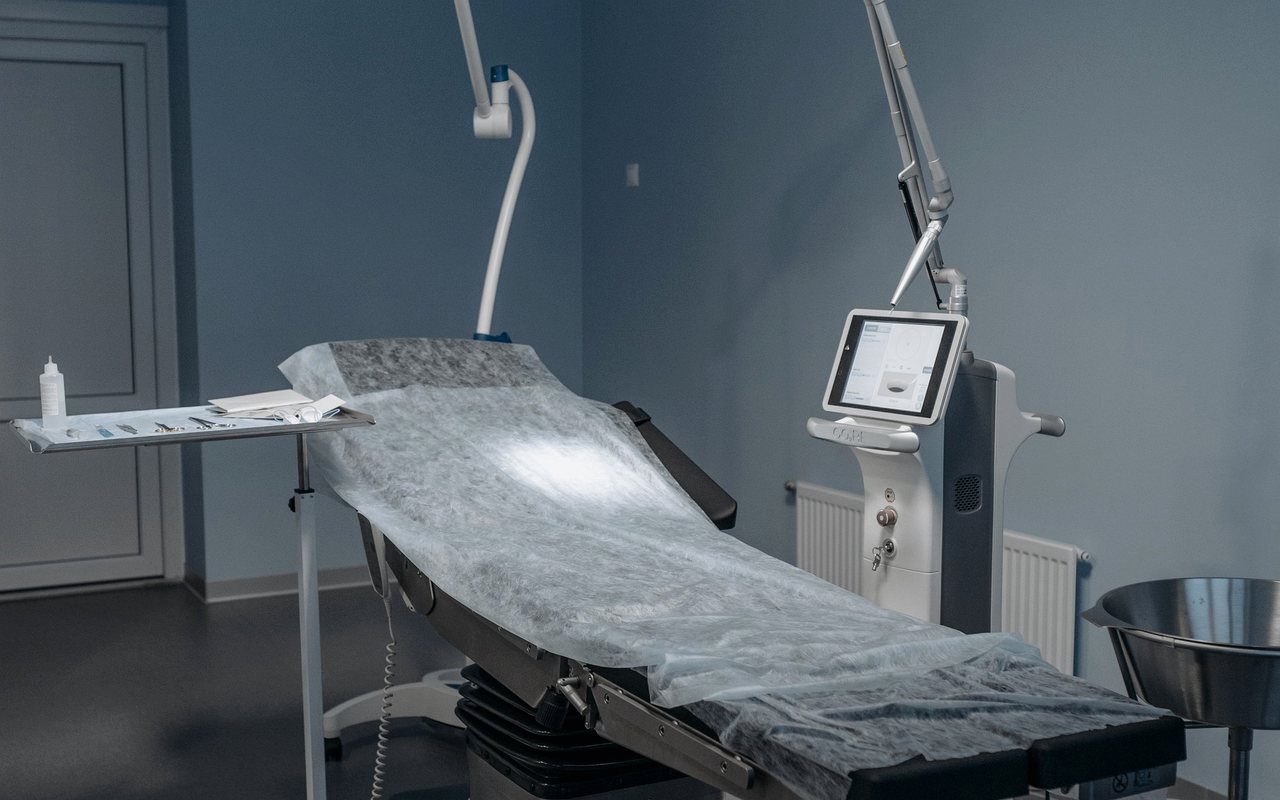
Ventriculoperitoneal shunt
Placement of a valved shunt system for congenital, adult and normal-pressure hydrocephalus.
See the procedure
Accumulation of cerebrospinal fluid inside the brain. It presents very differently in a newborn and in an older adult, and in both it is treatable.
The brain produces cerebrospinal fluid continuously and reabsorbs it at the same rate. When that balance breaks — because something obstructs circulation or reabsorption fails — fluid accumulates in the ventricles and dilates them. Causes range from a congenital malformation to a haemorrhage, meningitis or an obstructing tumour.
In an infant the skull bones are not yet fused, so the head grows: head circumference climbs above the expected curve, the fontanelle becomes tense, scalp veins become prominent and the characteristic downward gaze appears. That is why measuring head circumference at every paediatric visit is not a formality.
In older adults there is a particular form, normal-pressure hydrocephalus, frequently mistaken for dementia or Parkinson's disease. Its triad is gait disturbance — short steps, as if the feet were stuck to the floor — urinary incontinence and cognitive decline. It is one of the few causes of cognitive decline that can improve with surgery, and worth looking for.
The procedures that may be indicated for this condition. Which one applies to you — if any does — is decided on your imaging and your examination.
Placement of a valved shunt system for congenital, adult and normal-pressure hydrocephalus.
See the procedure
Surgical correction of premature cranial suture closure in infants, with vault remodelling.
See the procedure
Closure of the newborn neural defect, with management of associated hydrocephalus and follow-up for tethered cord.
See the procedureLoss of consciousness, the worst headache of your life, sudden weakness on one side, difficulty speaking, a seizure, projectile vomiting, or loss of bladder control together with back pain. Go to an emergency department immediately and call (664) 104-9153.
It is not cured in the sense of disappearing, but it is very well controlled. A shunt diverts the fluid permanently and allows a normal life. In some obstructive cases, endoscopic ventriculostomy restores circulation without implanting hardware.
The signs are the return of what was there before: headache, vomiting, drowsiness, irritability, changes in gaze or seizures. Also redness or swelling over the catheter track and fever. With any of these, seek care the same day.
It could be normal-pressure hydrocephalus, which is treatable. It deserves imaging and a neurosurgical assessment before assuming irreversible dementia. Here the right diagnosis changes the outcome.
Yes. Most activities, sport included, are possible. Only contact sports with a risk of direct impact over the catheter track are discouraged, and that is decided individually.
One consultation with your MRI or CT in hand is worth more than ten internet searches. Book by phone or through the form and you will be told what is there, what it means and what your options are.