
- Home
- Procedures
- Laminectomy and lumbar stenosis in Tijuana
Laminectomy and lumbar stenosis in Tijuana
When the canal carrying the nerves narrows, walking becomes difficult and sitting relieves it. Laminectomy gives the nerve roots their space back.
The symptom that gives stenosis away
Lumbar canal stenosis has a very recognisable clinical signature: neurogenic claudication. The patient walks one or two hundred metres and begins to feel heaviness, burning or weakness in the legs; they stop, lean forward or sit, and within a few minutes it passes. They can push a supermarket trolley for half an hour without trouble, yet cannot walk upright the same distance.
The explanation is mechanical: leaning forward opens the canal by a few millimetres and the nerves stop being compressed. That detail also separates stenosis from arterial claudication, in which stopping relieves but leaning forward changes nothing.
What is removed, and why fusion is sometimes needed
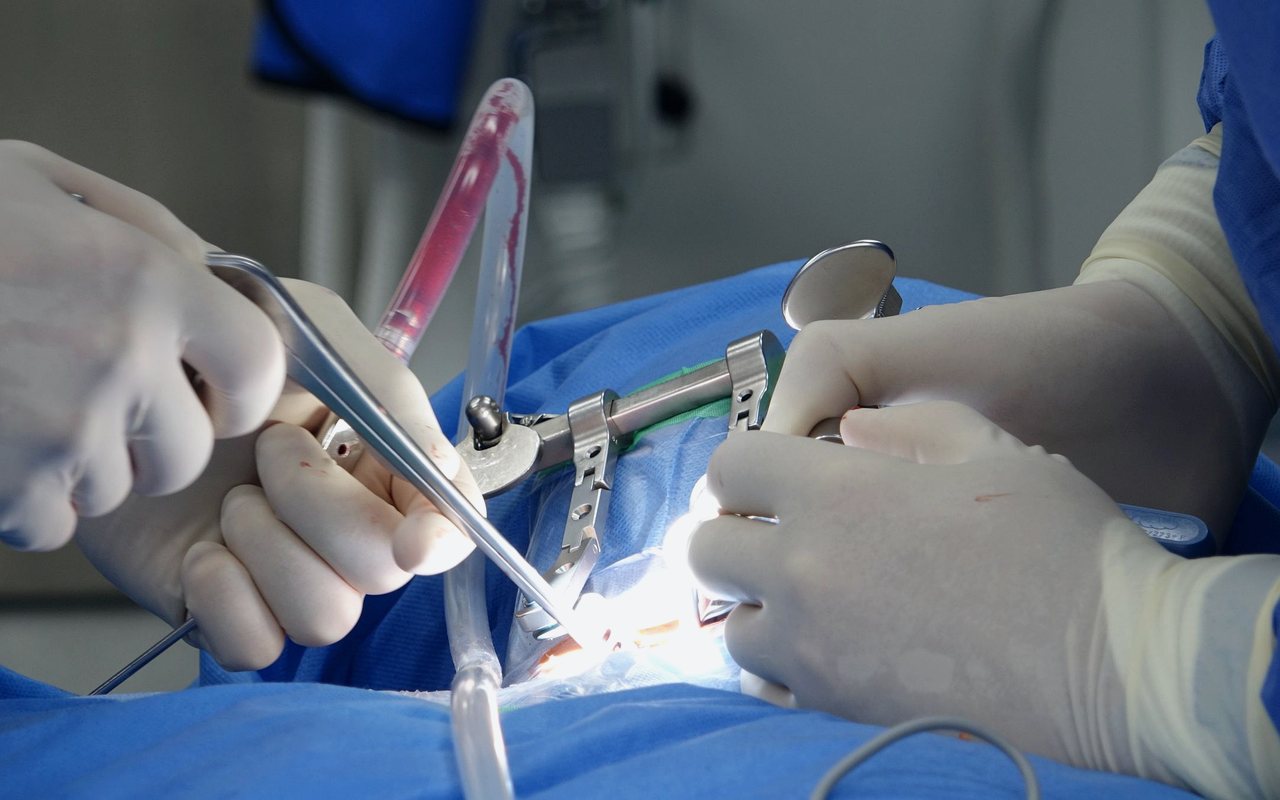
Decompression means removing the lamina, the thickened ligamentum flavum and the portions of facet joint narrowing the canal and lateral recesses, until the roots are free. As much facet as possible is preserved, because segment stability depends on it.
If the patient already has a spondylolisthesis, a degenerative scoliosis, or if decompression forces removal of too much facet, instrumented fusion is added to keep the segment from becoming unstable. Decompressing without assessing stability is the most frequent cause of reoperation in this surgery.
What the procedure involves
When it is indicated
- Lumbar canal stenosis with neurogenic claudication
- Ligamentum flavum hypertrophy compressing the dural sac
- Foraminal stenosis with persistent radicular pain
- Degenerative spondylolisthesis with associated stenosis
- Cord or root compression from tumour or epidural collection
- Lumbar stenosis with recompression after previous surgery
Techniques and resources
- High-speed drill
- Microscope or surgical loupes
- Kerrison rongeurs and curettes
- Intra-operative fluoroscopy
- MRI and dynamic films
- Pedicle instrumentation where required
Frequently asked questions about decompressive laminectomy
Claudication on walking is what responds best to decompression, and usually improves markedly. Recovery of strength or sensation, when a deficit has been established for a long time, is slower and less complete. That is why waiting years is unwise.
No. Stenosis without instability is treated by decompression alone. Screws are added when there is spondylolisthesis, scoliosis, instability demonstrated on dynamic films, or when decompression required removing a large part of the facet.
Age alone does not contraindicate surgery; what weighs is cardiovascular, pulmonary and functional status. Decompression without instrumentation is well tolerated by many older patients. It is assessed with your physician before deciding.
Bring your imaging and settle the question
One consultation with your MRI or CT in hand is worth more than ten internet searches. Book by phone or through the form and you will be told what is there, what it means and what your options are.