
- Home
- Spine surgery in Tijuana
Spine surgery in Tijuana
Disc herniation, sciatica, lumbar canal stenosis, neck pain and spinal instability. Half of this clinic ends without surgery, and that is a result too.
What spine surgery treats
Spine surgery solves two mechanical problems: compression of a nervous structure — a root or the cord — and instability of a segment that moves more than it should. Practically everything operated on in the spine falls into one of those two categories, or both at once.
That distinction explains why one patient is offered decompression alone and another decompression plus fusion. It is not a surgeon's preference: it is that in the second case instability is demonstrated, or the necessary decompression would leave the segment unstable.
The commonest conditions
Lumbar disc herniation with sciatica, lumbar canal stenosis with claudication on walking, cervical disc herniation with arm-radiating pain, cervical myelopathy, spondylolisthesis, adult degenerative scoliosis, osteoporotic vertebral fractures and spinal trauma.
Also vertebral and spinal cord tumours, vertebral infections, syringomyelia, congenital malformations of the spine, myelomeningocele and tethered cord syndrome. The conditions section covers the commonest one by one.
Why many patients do not need surgery
It is worth saying plainly: most lumbar disc herniations improve without surgery. With adequate analgesia, directed physiotherapy and controlled activity, a very high proportion of patients are substantially better within six to twelve weeks, because the herniated fragment tends to shrink on its own.
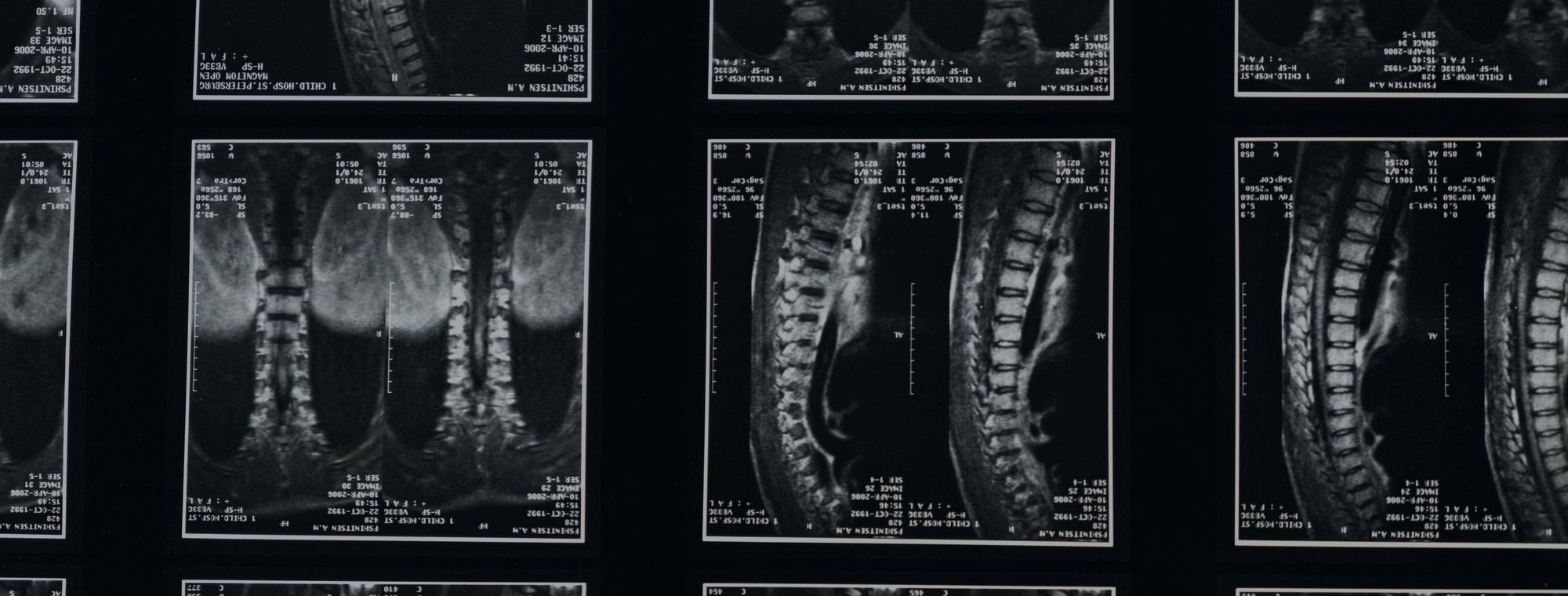
Moreover, MRI scans of people with no pain at all frequently show degenerated discs and protrusions. A herniation on an image is not, by itself, a surgical indication. What supports one is failure of properly delivered conservative treatment, progressive motor deficit, or cauda equina syndrome, which is an emergency.
When surgery genuinely is the answer
There are scenarios where waiting has a cost. Cauda equina syndrome — difficulty passing urine, incontinence, saddle numbness — is an emergency measured in hours. Progressive loss of strength in a leg or a hand does not allow months of observation either.
Cervical myelopathy, with clumsy hands and unsteady gait, tends to progress, and there surgery aims above all to halt deterioration. And disabling radicular pain that has not settled with proper treatment is a legitimate indication: microdiscectomy relieves leg pain sooner, sometimes far sooner, than waiting does.
What spine surgery covers
Lumbar microdiscectomy
Removal of the disc fragment compressing the root, small incision, under the microscope.
Decompressive laminectomy
Canal enlargement for lumbar stenosis with claudication on walking.
Instrumented fusion
Screws, rods and graft where there is instability, listhesis or deformity.
Anterior cervical discectomy
Cervical herniation and myelopathy, with a fusion spacer or disc prosthesis.
Spinal tumour surgery
Decompression and stabilisation in metastatic and intradural tumours.
Vertebroplasty and kyphoplasty
Percutaneous cement for osteoporotic vertebral fractures.
Spinal trauma surgery
Stabilisation and decompression in fractures and acute cord injury.
Tethered cord and dysraphism
Cord release in growing children and adolescents.
Bring your imaging and settle the question
One consultation with your MRI or CT in hand is worth more than ten internet searches. Book by phone or through the form and you will be told what is there, what it means and what your options are.