
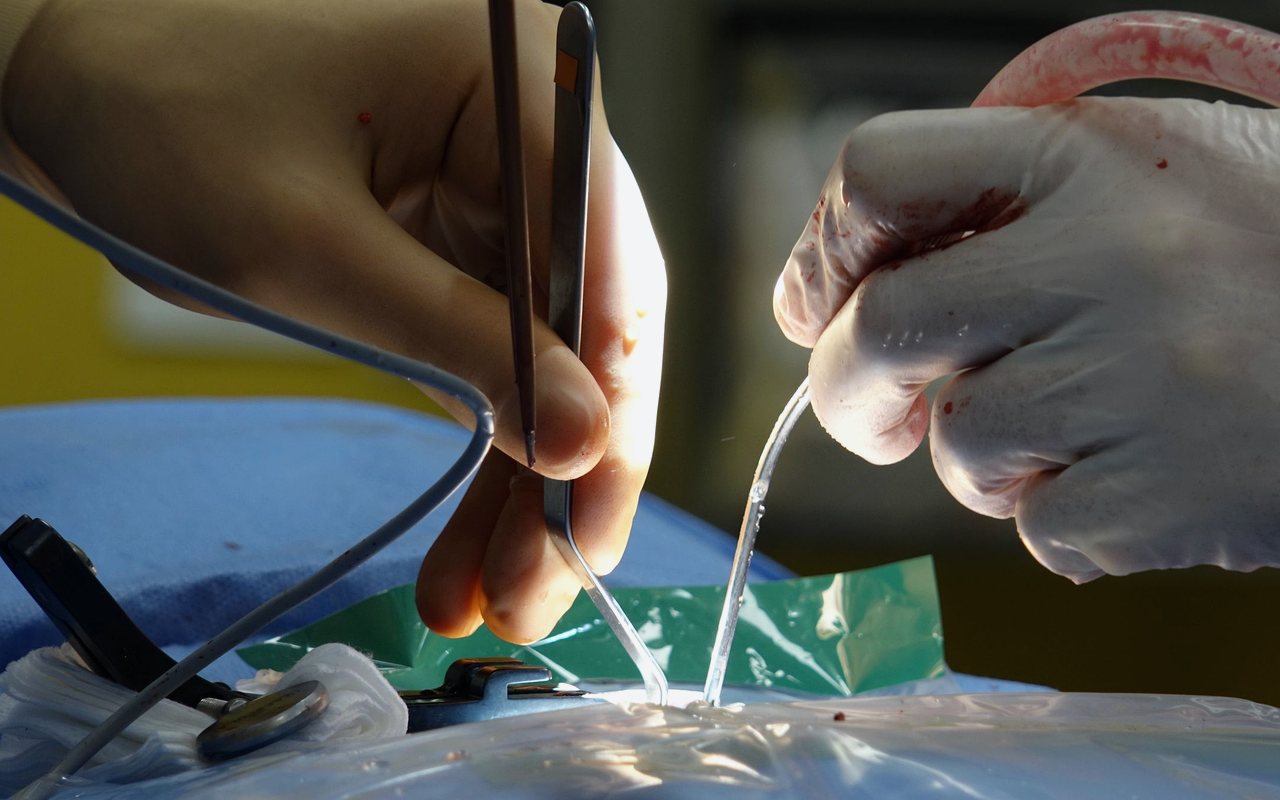
Functional neurosurgery
Procedures directed at facial pain, hemifacial spasm, spasticity and drug-resistant epilepsy.
See the procedure
Bursts of electric pain across half the face, triggered by speaking, chewing or brushing the cheek. Many patients undergo dental treatments they never needed.
The trigeminal is the nerve that carries sensation from the face. When its root suffers — usually because a blood vessel compresses it and wears away its insulation — attacks of lancinating pain appear, lasting seconds to a couple of minutes, on one side of the face, repeating through the day.
What makes the picture unmistakable are the triggers: speaking, chewing, brushing teeth, shaving, cold air, or simply brushing the cheek. Between attacks there may be no pain at all. That combination — electric, very brief pain with a tactile trigger — barely exists in other conditions.
The commonest error is blaming a tooth. Patients frequently arrive having already had root canals or extractions, with no relief, because the pain projected onto the dental arch. Before removing more teeth it is worth ruling out trigeminal neuralgia, especially if the pain comes in bursts and is triggered by touch.
The procedures that may be indicated for this condition. Which one applies to you — if any does — is decided on your imaging and your examination.
Procedures directed at facial pain, hemifacial spasm, spasticity and drug-resistant epilepsy.
See the procedure
Approaches to the skull base for tumours and lesions neighbouring cranial nerves and major vessels, with functional preservation as the priority.
See the procedure
A temporary bone window to reach the brain. The bone is replaced and fixed at the end — no gap is left behind.
See the procedureLoss of consciousness, the worst headache of your life, sudden weakness on one side, difficulty speaking, a seizure, projectile vomiting, or loss of bladder control together with back pain. Go to an emergency department immediately and call (664) 104-9153.
Dental pain is usually continuous and throbbing, worsens with heat or cold applied to the tooth, and responds to analgesics. Trigeminal neuralgia gives bursts lasting seconds with pain-free intervals, is triggered by touching the face or speaking, and responds poorly to ordinary painkillers.
It does not threaten life, but it can be profoundly disabling: some patients stop eating, speaking or going out for fear of an attack. That effect on daily life is reason enough to treat it seriously.
No. Most patients respond initially to carbamazepine or oxcarbazepine. Surgery enters when the medication stops working, when the dose must rise to intolerable levels, or when side effects prevent continuing.
Yes. When neuralgia appears in a young person, or affects both sides, multiple sclerosis and compressive lesions should be excluded with MRI. That is one reason imaging is not skipped.
One consultation with your MRI or CT in hand is worth more than ten internet searches. Book by phone or through the form and you will be told what is there, what it means and what your options are.