
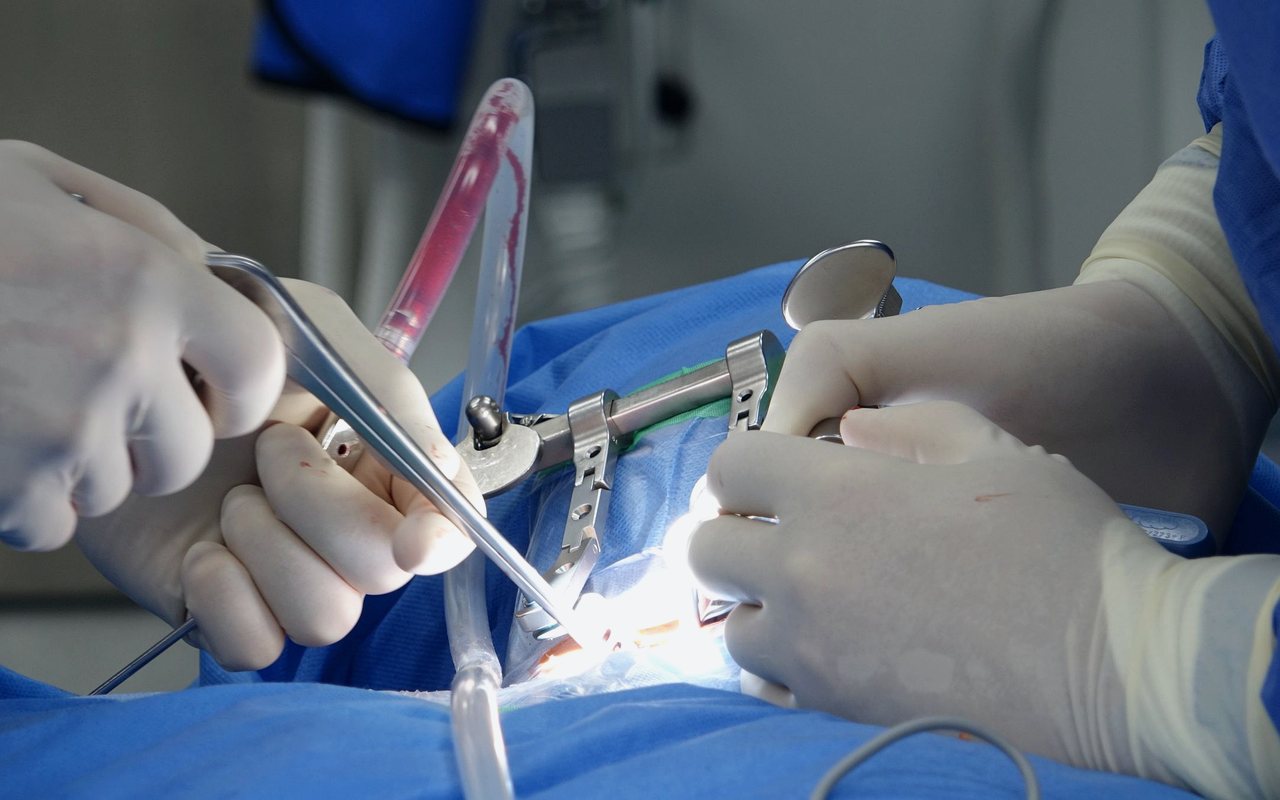
Decompressive laminectomy
Enlargement of the spinal canal for lumbar stenosis, removing lamina and hypertrophied ligamentum flavum.
See the procedure
If you walk a hundred metres and must stop because of heaviness in the legs, and sitting or leaning forward relieves it, that combination has a name.
Over the years, discs lose height, facet joints thicken and the ligamentum flavum hypertrophies. The result is a narrower spinal canal compressing the nerve roots. It is a degenerative process, not a sudden illness, which is why symptoms appear slowly over months or years.
The characteristic symptom is neurogenic claudication: walking produces heaviness, burning, cramping or weakness in the legs after a certain distance, and stopping is not enough; you have to sit or lean forward for it to settle. Many patients work this out for themselves and walk stooped or leaning on a supermarket trolley.
That postural detail is diagnostic. Leaning forward opens the canal by a few millimetres and the nerves stop being compressed. In arterial claudication, by contrast, simply stopping suffices and posture changes nothing. Telling the two apart avoids treating the spine when the problem is the arteries.
The procedures that may be indicated for this condition. Which one applies to you — if any does — is decided on your imaging and your examination.
Enlargement of the spinal canal for lumbar stenosis, removing lamina and hypertrophied ligamentum flavum.
See the procedure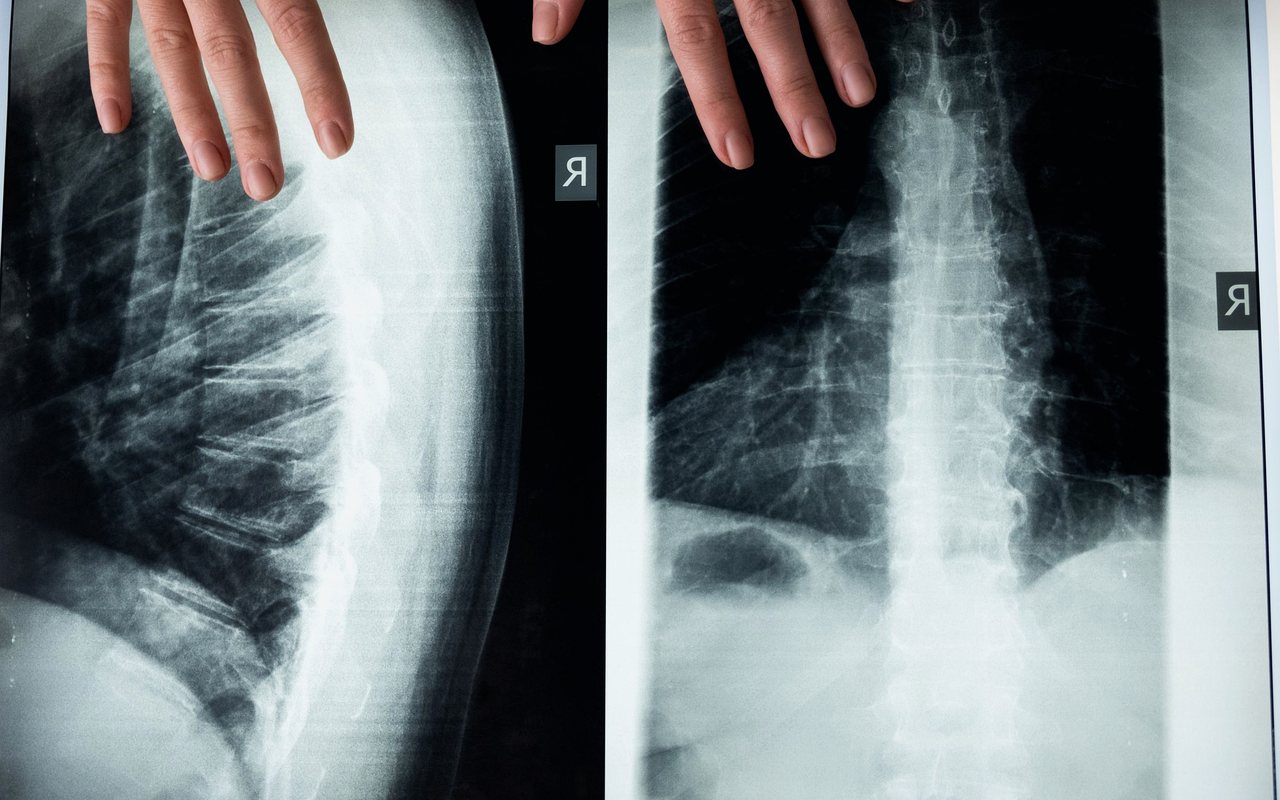
Pedicle instrumentation and bone fusion for instability, spondylolisthesis and lumbar deformity.
See the procedure
Percutaneous cement stabilisation of osteoporotic and tumoural vertebral fractures, with no open incision.
See the procedureLoss of consciousness, the worst headache of your life, sudden weakness on one side, difficulty speaking, a seizure, projectile vomiting, or loss of bladder control together with back pain. Go to an emergency department immediately and call (664) 104-9153.
In mild and moderate cases, often yes: flexion-based physiotherapy, weight control, walking with support and, in some patients, injections. Surgery is considered when the distance you can walk limits your life, or when weakness appears.
Because flexing the spine gains the canal a few millimetres of diameter and root compression eases. It is a mechanical phenomenon, and it is the clue that separates stenosis from other causes of pain on walking.
No. A herniation usually compresses a single root and causes pain in one leg, often in younger people. Stenosis compresses several roots, usually affects both legs, and comes from wear, typically after sixty.
It can be very much worth it, because what is regained is the independence to walk. What is assessed is not age on paper but cardiovascular, pulmonary and functional status. Decompression without instrumentation is well tolerated by many older patients.
One consultation with your MRI or CT in hand is worth more than ten internet searches. Book by phone or through the form and you will be told what is there, what it means and what your options are.